
QCPR CPR course with Laerdal system for building muscle memory and BLS CPR training for medical staff
QCPR CPR course with Laerdal system integrated with the Life Shield model
During a real-life emergency, stress and anxiety surge, and memory is rarely in focus.
The "Life Shield" model by Shomrim Al HaChayim is designed for rapid recall of the essentials for success in managing a medical event, serving as a professional and focused anchor to save lives.
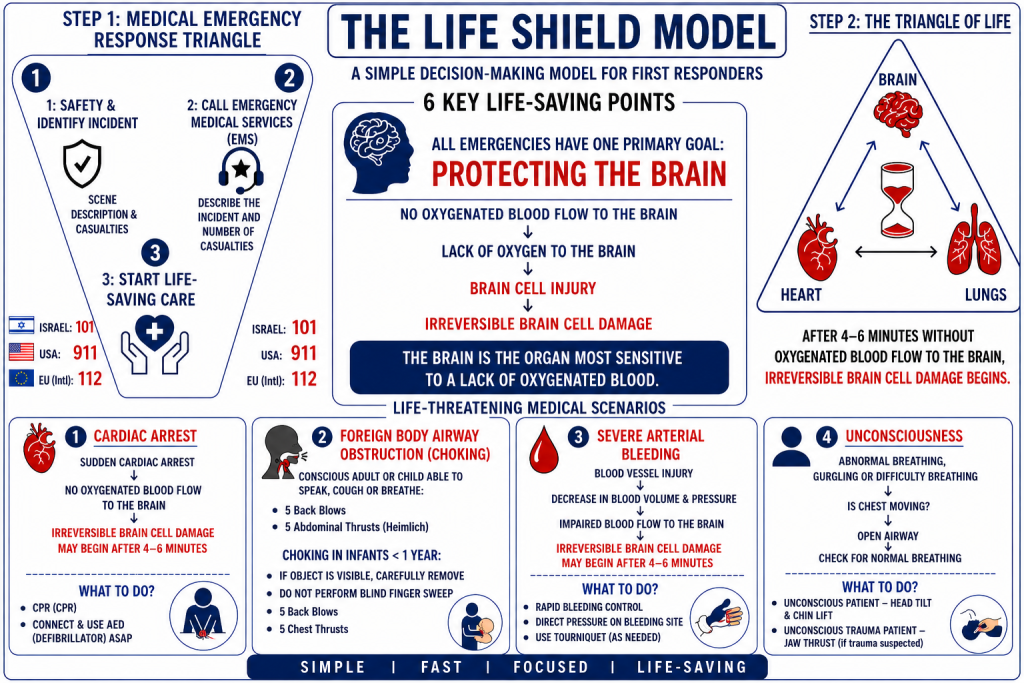
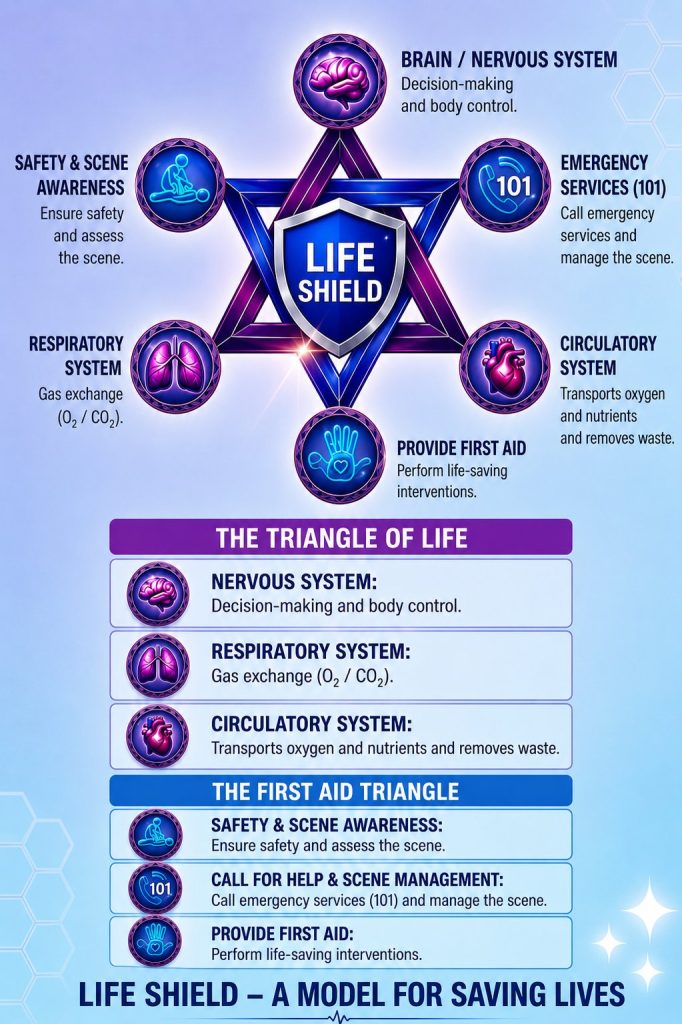
The Life Shield model is a model for managing and treating a medical emergency in the field, helping perform first aid actions in an organized, safe, and efficient manner under pressure. The model integrates the principles of the First Aid Triangle to establish a rigid, clear, and easy-to-remember sequence of operations — starting from the stage of identifying scene safety and the medical emergency, through reporting and summoning help, to executing urgent, life-saving medical procedures, while closely adhering to the Triangle of Life — the Central Nervous System (the brain), the Cardiovascular System, and the Respiratory System — to provide life-saving actions until advanced medical emergency teams arrive.
The Life Shield model was built to assist in rapid decision-making and proper management of a medical emergency even in situations of stress and anxiety, combining safety, a clear sequence of operations, understanding vital body systems, and an efficient response in real time.
From a State of Stress – to Professionalism in the Field
The First Aid Triangle
- Identifying safety and the medical emergency
- Reporting and summoning help
- Life-saving actions
The Triangle of Life
- The Central Nervous System (The Brain)
- The Cardiovascular System
- The Respiratory System
In the center of a medical event, we want to ensure that the sequence of actions remains rigid and precise. In the field, when you have no external aids or monitoring equipment near you, it is very difficult to know if your actions are truly effective.
Do you know why this precision is critical?
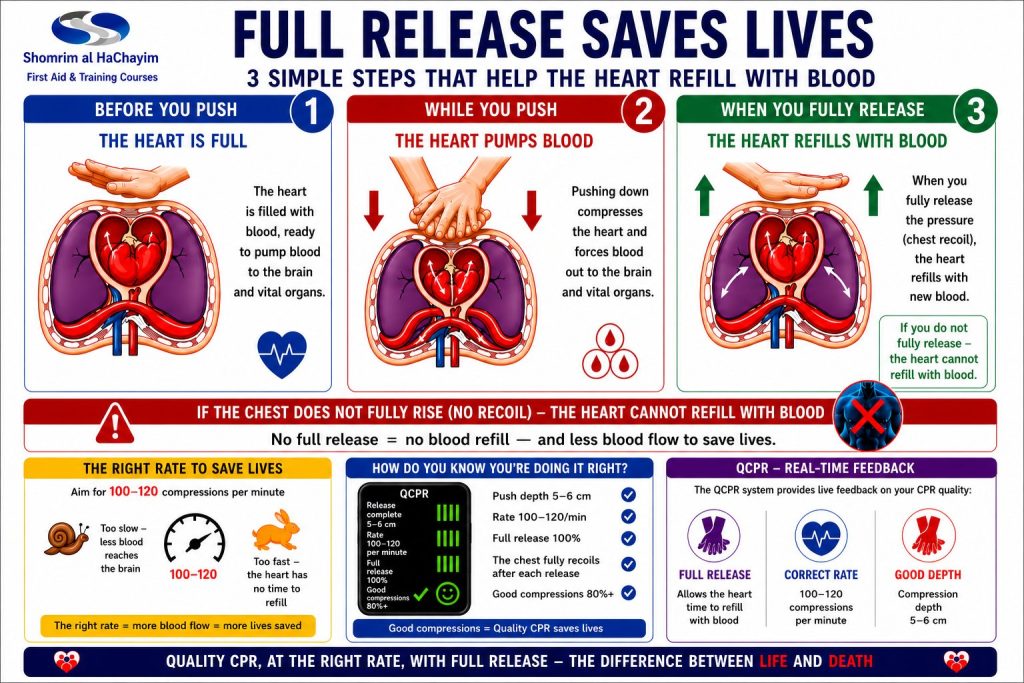
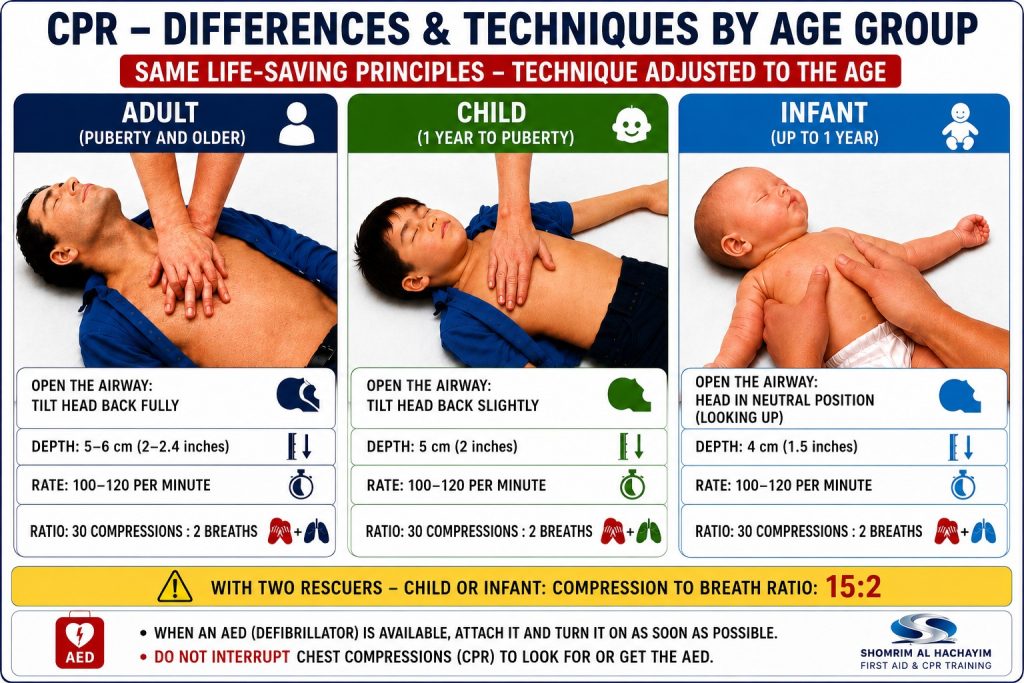
During CPR, the most important part is chest compressions, but without prior training that is ingrained in the body – it is very easy to miss:
- Lack of release (Leaning): When we lean on the patient and the chest does not rise, the heart does not manage to draw new blood inside – and in such a situation, the CPR ends without success.
- Too fast rate: The heart does not have enough time to expand and fill with blood.
- Too slow rate: Failing to build the minimum blood pressure required to pump blood to the brain.
- Not deep compression: The heart is not squeezed enough to push blood out to the body.
This is where the added value of a CPR course with the Laerdal system comes in
The course that instills true muscle memory in you – the important experience that will be with you in the field! We use Laerdal's QCPR and AED technology (which meet international rules and standards accepted by the leading CPR associations in the world) to build your personal skill and experience, aiming to lead to full success in saving lives in the field.
The integration between the CPR course and the Life Shield model assists in creating improved memory for managing a medical emergency, rapid decision-making, understanding vital body systems, and performing life-saving actions in an organized and efficient manner in real time.
Principles of the Life Shield Model
- Safety of the responder, the patient, and the environment
- Rapid identification of the medical emergency
- Correct and efficient reporting and summoning of help
- Execution of urgent, life-saving medical procedures
- Understanding the Triangle of Life and providing initial assistance to vital body systems
- Practical training using computerized systems to create muscle memory and an efficient response under pressure
The Life Shield model allows creating a unified and common language regarding field operations for those engaged in saving human lives, maintaining a clear sequence of operations, working under pressure, and acting in accordance with the level of training and professional authority of every responder — from a first aid provider to a doctor.
The Life Shield – Your Way to Save Lives
During a real-world emergency, as stress and anxiety skyrocket, memory is not always focused.
The 'Life Shield' model was developed to enable rapid identification and recall of core treatment principles. It serves as a focused, professional anchor that connects the Triangle of Life (vital body systems) to the first responder's sequence of actions in the field.
The Triangle of Life: Vital Systems Required for Survival
It is crucial to understand: these three systems are entirely interdependent. Failure in one will trigger a rapid collapse of the others, leading to death within minutes.
The First Responder Triangle: Scene Management
To preserve the Triangle of Life and maintain vital organ function, the first responder must operate under a structured and highly professional protocol, aligned with their certified first aid training:
- Safety First: Do not become a casualty yourself! Thoroughly scan the scene for hazards (electricity, traffic, unstable structures) before approaching the patient.
- Assessment & Activation of Emergency Services: Rapidly evaluate the situation and immediately contact emergency services (EMS). Provide an accurate location, the number of casualties, and the nature of the injuries so the dispatcher can deploy the appropriate resources (BLS Ambulance or Mobile Intensive Care Unit).
- Life-Saving Interventions: Support vital body systems and execute immediate emergency actions. These interventions are performed with the clear clinical understanding that any injury to one of the vital systems—Central Nervous System, Respiratory System, or Cardiovascular System—will trigger a lethal chain reaction. This leads to immediate impairment of the remaining systems, rapid multisystem failure, and death.
Understanding the vital connection between these systems allows a first responder to rapidly pinpoint the threat and perform life-saving interventions based on common clinical field scenarios: cardiac arrest, choking, severe trauma, and massive hemorrhage.
Clinical Field Scenarios & System Failure Breakdown
The Central Nervous System (The Brain)
The primary command center of the Triangle of Life, requiring a continuous supply of oxygen and blood. An oxygen deficit of just 4–6 minutes can trigger irreversible brain damage, neuronal death, and a total cessation of vital commands to the rest of the body.
Field Scenarios:
- Cardiac Arrest: Immediate arrest of cerebral perfusion.
- Severe Head Trauma: Traumatic brain injury compromising neurological function.
- Cerebrospinal Fluid (CSF) Leakage: Indicating a critical basilar skull fracture.
- Profound Unconsciousness: Deep comatose states that depress and shut down the respiratory drive center in the brainstem.
The Respiratory System (Airway & Lungs)
The oxygen provider for the Triangle of Life. When respiratory function is compromised, blood oxygenation drops immediately, starving the brain of oxygen within minutes, which leads to sudden systemic collapse and death.
Field Scenarios (Asphyxiation & Choking Hazards):
- Mechanical Airway Obstruction: Choking caused by a foreign body blocking the airway.
- Anatomical Airway Obstruction: The tongue falling backward to block the hypopharynx in an unconscious patient.
- Acute Asphyxiation via Airway Edema: Severe, life-threatening airway swelling during Anaphylaxis (severe systemic allergic reaction).
The Cardiovascular System (Circulation & Perfusion)
The system responsible for circulating blood, oxygen, and metabolic energy to all components of the Triangle of Life. Without a functional pump (the heart) or an adequate circulating blood volume, oxygen delivery to the brain and lungs fails, causing the entire system to crash rapidly.
Conclusion
The role of a first responder is to act as the definitive frontline of survival. The 'Life Shield' model is your absolute anchor in the field—allowing you to maintain composure, ensure a proper, seamless treatment sequence, and deliver the critical interventions that sustain life until professional medical emergency teams arrive.
Because in the crucial moment of truth – your knowledge and structured response are the exact difference between life and death.